
What Is Lurking Behind Roller Doors – Managing Fire Risks in Australian Self-Storage Facilities
When firefighters pull up to a working blaze at a self-storage facility, they face a unique tactical nightmare: hundreds of locked metal roller doors with zero visibility into what lies behind any of them. Is it a harmless collection of timber furniture, or an illegal stash of fuel, gas cylinders, and compromised lithium-ion batteries?
Self-storage sites are booming right across Australia. Yet their very business model creates a volatile blend of heavy combustible loads, unknown hazardous materials, and a constant turnover of transient site visitors.
Under the National Construction Code (NCC 2022), self-storage buildings fall under the Class 7b storage classification. If you manage or own one of these sites, you carry strict legal duties under Safe Work Australia Work Health and Safety (WHS) laws, state fire authority mandates, and Australian Standards to keep workers, tenants, and emergency responders safe.
The Hidden Hazards Behind the Metal Doors
Why are self-storage facilities such a complex fire risk? It starts with the unknown. While tenancy agreements strictly regulate what can be stored, facility managers cannot physically inspect every box brought through the gate.
Unauthorised storage of dangerous goods remains a constant headache. It is not uncommon for tenants to quietly store lawnmowers full of petrol, paint thinners, LPG cylinders, or trade chemicals that violate safety rules.
Then there is the sheer density of fuel. A typical unit is crammed with cardboard boxes, soft furnishings, synthetic materials, and timber crates. Once a fire catches, this concentrated fuel load burns intensely, producing dense, toxic smoke that quickly fills internal corridors.
High Stacking and the Hidden Threat of Blocked Sprinklers
When tenants squeeze every square centimetre of value out of their rental space, they often stack boxes right up to the roof. This creates a critical safety issue for automatic fire protection systems.
Under Australian Standard AS 2118, which governs automatic fire sprinkler systems, there must be a clear space of at least 500 millimetres below sprinkler heads. Stacking items above this clearance limit prevents water from distributing properly during a fire, turning an active sprinkler head into a direct stream that misses surrounding fuel.
International guidelines, such as NFPA 13 developed by the National Fire Protection Association (NFPA), similarly highlight how obstructed sprinkler clearance leads to rapid fire spread in storage environments.
Lithium-Ion Batteries and Unauthorised Power Tapping
The rapid rise of e-bikes, e-scooters, cordless power tools, and battery-powered garden equipment has introduced a dangerous new variable to storage units. Storing damaged or sub-standard lithium-ion batteries can lead to thermal runaway, where cells generate their own oxygen and heat, bursting into violent, self-sustaining flames.
Making matters worse, some tenants attempt to charge battery packs inside units or shared driveways. Tapping into shared power boards or running extension cords under roller doors creates severe electrical overload risks that can easily ignite surrounding cardboard and timber.
Smoke Spread, Open Ceilings, and Blocked Corridors
Building design also plays a massive role in fire dynamics. Many older or budget self-storage layouts use wire mesh ceilings or lightweight partition walls between units instead of solid, fire-rated construction.
Without adequate compartmentation and Fire Resistance Levels (FRLs) required by the NCC, heat and smoke move laterally from one unit to the next in minutes. Furthermore, heavy dust or vehicle exhaust fumes in drive-in facility bays can cause false alarms or compromise standard Fire Detection and Alarm Systems (FDAS) if smoke detectors are not correctly specified and maintained.
Access and egress present another major operational hurdle. Vehicles parked in driveways, trailer drawbars sticking out into fire lanes, or dumped furniture blocking exit corridors can prevent tenants from escaping and severely delay fire crews trying to run hoses into the building.
Proactive Fire Prevention Strategies for Facility Owners
Protecting a self-storage facility requires moving away from a set and forget mentality. Prevention starts at the front desk with clear, enforceable tenancy agreements that explicitly ban dangerous goods, flammable liquids, gas cylinders, and battery charging operations.
Require tenants to sign a physical declaration upon moving in, and back it up with clear visual signage across the property detailing prohibited items in multiple languages where necessary.
To tackle sprinkler obstruction, paint bright red clearance lines 500 millimetres below the sprinkler ceiling height inside every single unit. Point these lines out during tenant onboarding so there is no confusion about stacking limits.
Regular site walk-throughs by facility staff are essential. Train your team to look for subtle warning signs: chemical smells, heat radiating from a roller door, extension cords running beneath doors, or rubbish piled in fire corridors. Some forward-thinking operators even use thermal imaging technology during routine perimeter checks to spot hidden electrical heat build-ups before flames break out.
From a structural perspective, ensure your facility meets NCC Class 7b requirements by maintaining draft stops, solid fire-rated partitions, and approved fire dampers to stop smoke travelling through hidden ceiling cavities.
Maintenance Frameworks and Essential Safety Measures
Building compliance relies on strict servicing schedules set out in Australian Standards. Under AS 1851, all active fire protection systems must undergo routine testing, inspection, and maintenance by qualified technicians.
This includes your FDAS, automatic sprinklers, fire hydrants, hose reels, and emergency lighting. Keeping accurate logbooks on site is a legal requirement that proves you are meeting your WHS duty of care.
Portable fire extinguishers must be installed and serviced in accordance with AS 2444. Place Dry Chemical ABE and Carbon Dioxide (CO2) extinguishers at strategic points along driveways, near lift lobbies, and at corridor junctions, ensuring location signs are clear and access remains completely unobstructed.
Your site must also maintain an up-to-date Emergency Plan structured under AS 3745, which covers planning for emergencies in facilities. Post clear Evacuation Diagrams at every main pedestrian entrance, lift lobby, and hallway intersection, clearly showing the shortest path to the Emergency Assembly Area.
Under Safe Work Australia regulations, you must also provide basic site safety inductions for visiting contractors and maintain Safety Data Sheets (SDS) for any cleaning or maintenance chemicals stored on site by facility staff.
How to Respond When an Incident Occurs
If a fire breaks out or smoke is detected at your facility, quick and decisive action saves lives. Follow these critical steps:
- Immediate Alerting: Ensure your FDAS automatically triggers building alarms and alerts the state fire authority. Call 000 immediately to confirm the incident and provide exact address details and access information.
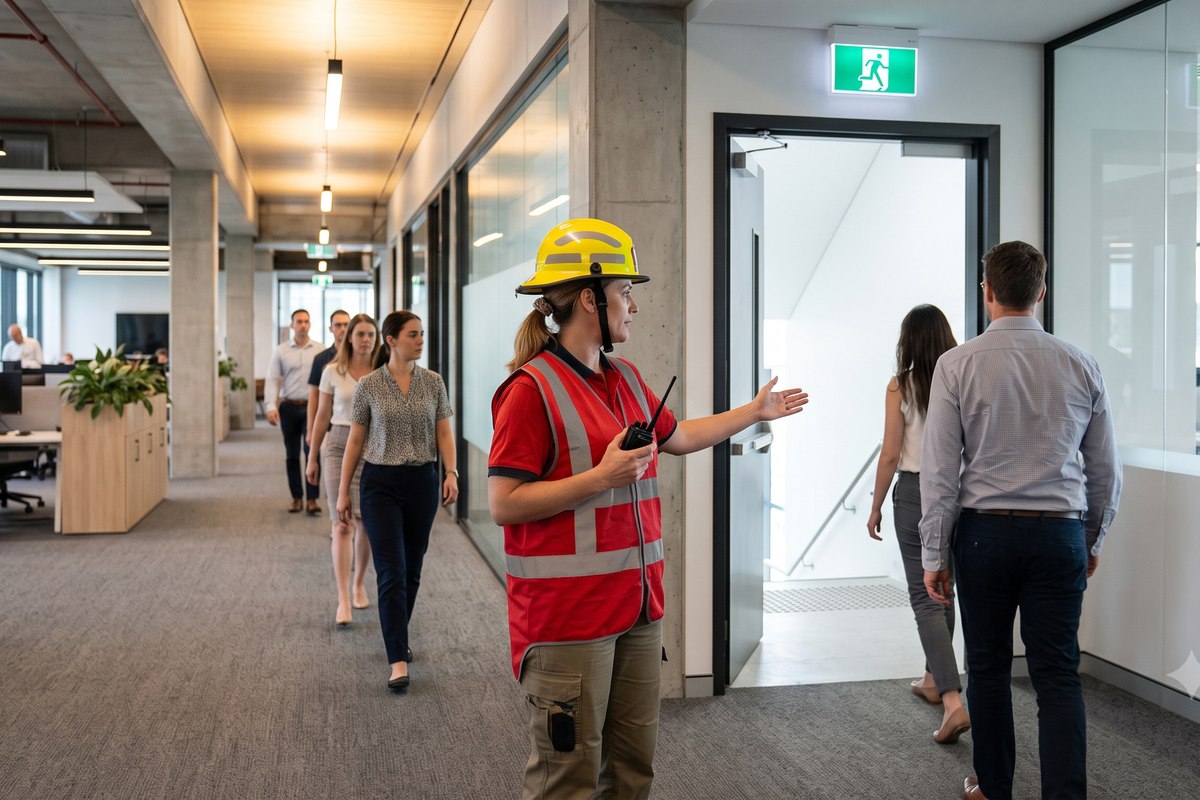
- Orderly Evacuation: Trained Fire Wardens should immediately direct all tenants, contractors, and visitors out of drive-in bays and corridors, guiding them to the primary Emergency Assembly Area located in the main car park away from fire authority access gates.
- Power Isolation: If it is safe to do so and staff are trained, isolate non-essential electrical circuits to the affected zone to prevent further electrical ignition.
- Emergency Services Handover: Meet responding fire crews at the main gate. Hand over emergency master keys, site access codes, building plans, and a manifest detailing any known high-risk or commercial storage units.
Building a Safer Storage Culture Through Training
Managing fire safety in a self-storage facility is a balancing act between providing flexible customer service and maintaining strict regulatory control. When you combine robust tenancy contracts, disciplined AS 1851 servicing, and regular physical inspections, you drastically reduce your site exposure to catastrophic losses.
Equipping your facility managers and operational staff with practical, hands-on knowledge is the most effective way to ensure these safety protocols are followed every day.
At Fire Industry Academy, we offer accredited training programs tailored to real-world facility risks. Whether your team needs Fire Warden certification to manage emergency evacuations or an in-depth understanding of Fire Detection and Alarm Systems (FDAS), our expert trainers deliver the practical skills needed to maintain compliance and protect lives. Explore our upcoming courses today to keep your facility safe and fully compliant.