
Why H₂O Isn’t Always the Answer: The Science of Why Water Can Make Certain Fires Worse
If a fire broke out in your workplace right now, would your first instinct be to grab a bucket of water or point a standard hose reel at it? For many people, throwing water on flames is a knee-jerk reaction. In the wrong situation, however, that split-second decision can turn a manageable incident into a catastrophic explosion or fatal shock.
Welcome to today’s deep dive, and a quick shout-out to Darlene Duran and our online learners joining us for this session! As fire safety trainers, one of our biggest priorities at Fire Industry Academy is dispelling the dangerous myth that water quenches every flame.
While water works brilliantly on Class A combustible solids like wood, paper, and rubbish, applying it to flammable liquids, gases, metals, live electrical gear, or cooking oils can trigger violent explosive reactions, rapid steam expansion, or lethal electrocution. Knowing which extinguishing agent to apply isn’t just a matter of common sense. It is strictly governed by Australian Standards, including AS 2444 for portable fire extinguisher selection and location, and AS/NZS 1841 for portable fire extinguisher manufacturing and performance.
The Physics of Water: How H₂O Can Fuel the Flame
Understanding why water fails on certain fires comes down to basic chemistry and physics. Each fire class presents a unique hazard when water is introduced:
- Class B Fires (Flammable and Combustible Liquids): Petrol, oil, and paint are lighter and less dense than water. When you throw water onto burning petrol, the water instantly sinks to the bottom. As it heats up under the burning liquid, it boils, expands, and violently splatters the burning fuel outward. Instead of smothering the fire, you spread flaming liquid across a much larger surface area.
- Class C Fires (Flammable Gases): Gas fires burn at high velocity from a pressurised leak or cylinder, such as LPG or natural gas. Water cannot stop the flow of gas. If you use water to douse the visible flame without isolating the gas valve, invisible and highly explosive gas continues to flood the area, building up an explosive cloud that can detonate from any nearby ignition source.
- Class D Fires (Combustible Metals): Metals such as magnesium, sodium, and potassium burn at extreme temperatures, frequently exceeding 1,000°C to 2,000°C. At these extreme heat levels, water molecules split apart instantly into hydrogen and oxygen gas. Instead of cooling the metal, water supplies pure, highly volatile fuel, causing violent metal-fuelled explosions.
- Class E Hazards (Electrically Energised Equipment): Tap water and standard extinguisher water contain dissolved minerals that naturally conduct electricity. Directing a solid stream or spray of water at live switchboards, computers, or appliances creates an immediate, continuous electrical bridge straight back to your body, leading to severe electric shock or lethal electrocution.
- Class F Fires (Cooking Oils and Fats): Commercial and domestic cooking oils burn at temperatures exceeding 300°C, which is far above the 100°C boiling point of water. As highlighted in standard testing under AS/NZS 1841.2 for wet chemical units, when water touches burning oil, it immediately sinks below the surface and flash-boils into steam. Water expands roughly 1,700 times its volume when turning into steam. This sudden expansion hurls a massive fireball of atomised, burning oil high into the air, instantly engulfing surrounding walls, ceilings, and nearby occupants.
Building a Watertight Fire Prevention Strategy
Preventing dangerous fire incidents starts long before a flame appears. A compliant workplace relies on structured prevention measures:
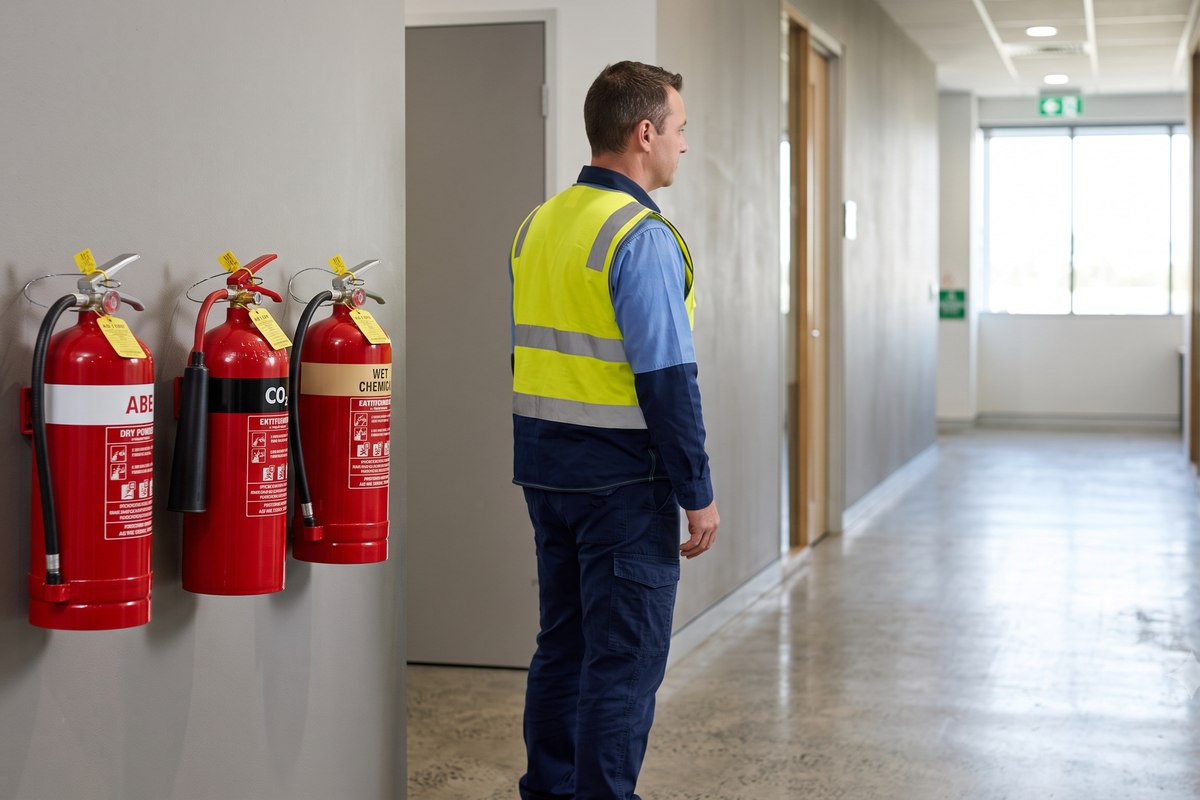
- Correct Extinguisher Selection and Location (AS 2444): Equip your facility with the correct specialised extinguishers, such as ABE Dry Powder, Carbon Dioxide (CO₂), Wet Chemical, or Class D Powder, placed within easy reach of high-risk zones.
- Clear Colour-Coded Signage (AS/NZS 1841): Display distinct location signs and colour bands so occupants never grab a water cylinder by mistake. Look for Red with a Black band for CO₂, Red with an Oatmeal band for Wet Chemical, and Red with a White band for ABE Dry Powder.
- Equipment Isolation Protocols: Establish clear procedures to quickly shut down gas cylinders, main power switches, and commercial fryers before an emergency escalates.
- Targeted Fire Warden Training: Educate your floor wardens and safety officers under Work Health and Safety (WHS) guidelines so they can identify fire classes instantly before grabbing a suppression tool.
Smart Safety Practices Before You Squeeze the Handle
When a fire incident occurs, taking a moment to assess the situation prevents critical mistakes:
- Conduct a Rapid Scene Assessment: Identify the fuel source before taking action. Is it a solid material, liquid, gas, live electrical item, or cooking grease?
- Verify the Fire Extinguisher ID Band: Never use a solid red cylinder (Water) or a Red cylinder with a Blue band (Foam) on Class E electrical or Class F oil fires.
- Isolate Energy and Fuel Lines First: For Class C gas or Class E electrical hazards, isolate the mains switch or close the cylinder valve if it is safe to do so before attempting to extinguish the flames.
- Deploy Alternative Suppression Tools: Use a certified fire blanket for small kitchen grease fires or personal protection, or deploy dedicated Wet Chemical or CO₂ extinguishers as trained.
Step-by-Step Emergency Response When Fire Strikes
If a fire breaks out, follow these standard emergency steps:
- Alert and Evacuate: Sound the alarm, direct nearby occupants to evacuate, and call Emergency Services on 000 immediately.
- Assess Fire Class and Safety Route: Confirm the type of fire and ensure you have an unobstructed exit path behind you at all times.
- Isolate Power or Gas (If Safe): Shut down main electrical circuit breakers or turn off gas supply valves to remove the fuel feeding Class C or E hazards.
- Select and Apply the Correct Agent Using the PASS Technique: Choose the appropriate cylinder and follow the PASS rule: Pull the pin, Aim at the base of the fire, Squeeze the handle, and Sweep side-to-side.
- Retreat if Extinguishing Fails: If the fire spreads or the wrong agent was accidentally applied, evacuate immediately, close doors behind you to contain the fire, and wait for Fire and Rescue crews to arrive.
Key Takeaways for Workplace Safety Officers and Facility Managers
- Respect Fire Chemistry: Remember that water is designed primarily for Class A organic solids like wood and cardboard.
- Maintain Your Equipment (AS 1851): Ensure all portable fire extinguishers and suppression systems undergo regular inspection and routine testing in accordance with AS 1851 (Routine service of fire protection systems and equipment).
- Conduct Regular Risk Audits: Re-evaluate your premises, especially around car parks, battery storage areas, server rooms, and commercial kitchens, to ensure non-water extinguishers are available within required travel distances.
- Empower Your Workplace: Practical training builds muscle memory so your team reads extinguisher colour bands accurately under pressure.
Confidence When Seconds Count
Water is a powerful extinguishing agent for paper, timber, and rubbish fires. On Class B, C, D, E, or F fires, however, using water can turn a small flame into a dangerous explosion, fireball, or electrical hazard.
Effective fire safety relies on knowing your standards and acting decisively. Comprehensive Fire Warden training and accredited Fire Detection and Alarm Systems (FDAS) certifications give your team the skills and knowledge needed to pick the right suppression tool every single time.